At 08:00 AM on a muggy Samui morning, office temperatures rise quickly and staff focus begins to slip when drinking supplies run dry. Keeping a workplace properly hydrated requires a clear inventory plan based on your team size and daily operating hours.
Calculating Daily Hydration Baseline for Teams
Heavy humidity makes people drink far more water than standard corporate guides suggest. While organizing morning dispatch sheets during a humid monsoon morning, I noticed how small offices in Samui regularly underestimate their daily volume. A team of ten employees working eight hours usually needs at least fifteen litres every day just for drinking. (I once miscalculated this rate for a client and left their crew thirsty before noon.) Starting with a clear baseline prevents unexpected shortages.
Factoring Climate and Afternoon Work Schedules
Tropical heat peaks after midday, causing workplace consumption to double during afternoon shifts. While reviewing route maps near a congested market intersection during a midday rain shower, I tracked how heat increases drink orders across local businesses. Active staff or teams walking between buildings require an additional half litre per person each afternoon. Factoring in these warmer hours ensures your inventory stays adequate throughout late project deadlines without sudden shortages.
Balancing Stock Sizes Between Small and Large Bottles
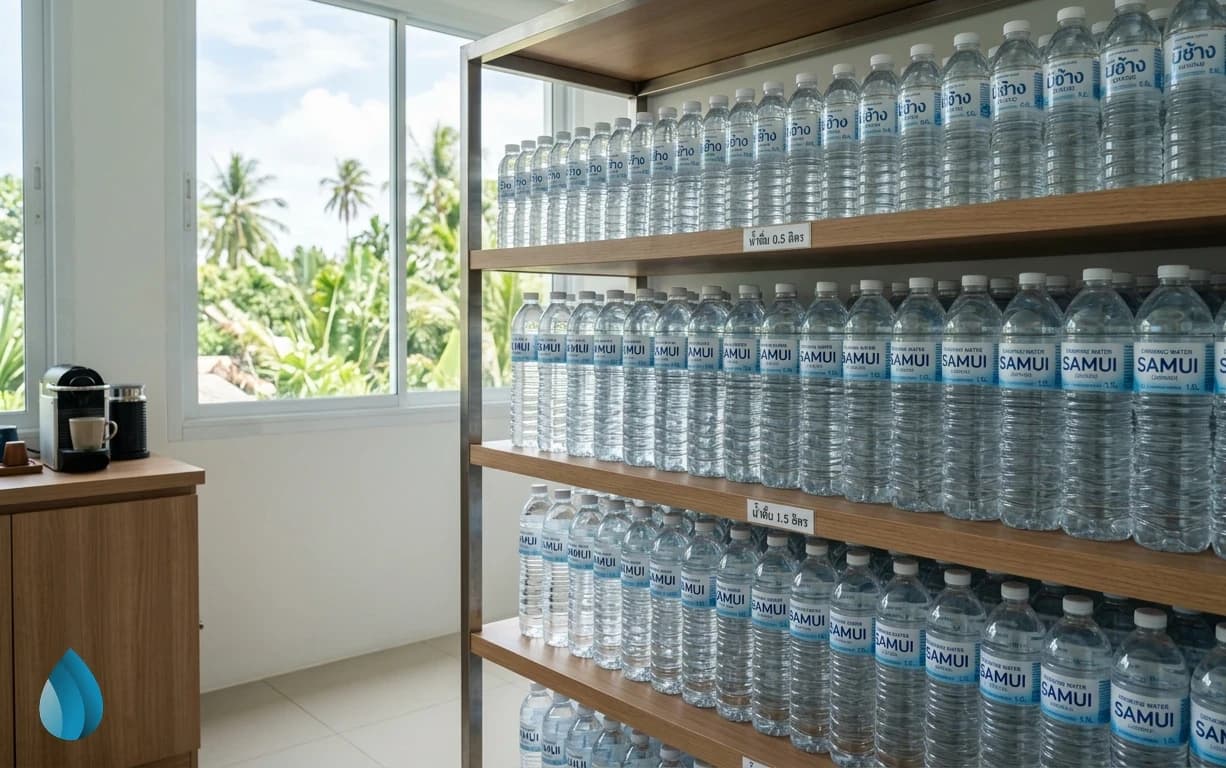
Different bottle capacities serve distinct needs inside a busy workplace environment. While checking ten delivery crates loaded on a Monday morning dispatch board, I saw how combining zero point five litre and one point five litre bottles balances individual convenience with larger team stock. Small bottles suit desk use and meetings, whereas larger containers easily refill shared pantry carafes. Mixing both sizes stops workers from leaving the office searching for cold drinks.
Managing Pantry Storage Space for Weekly Orders
Limited commercial floor space often restricts how many crates an office can store at once. Empty pantry shelves near a busy desk area caught my attention during a site visit, showing how crowded rooms struggle with bulky inventory. Have you ever tripped over extra bottles in a tight breakroom? Stacking too many crates creates office clutter, yet ordering too little causes constant stockouts. Measure cabinet dimensions so weekly stock fits neatly.
Preventing Sudden Water Exhaustion with Scheduled Restocks
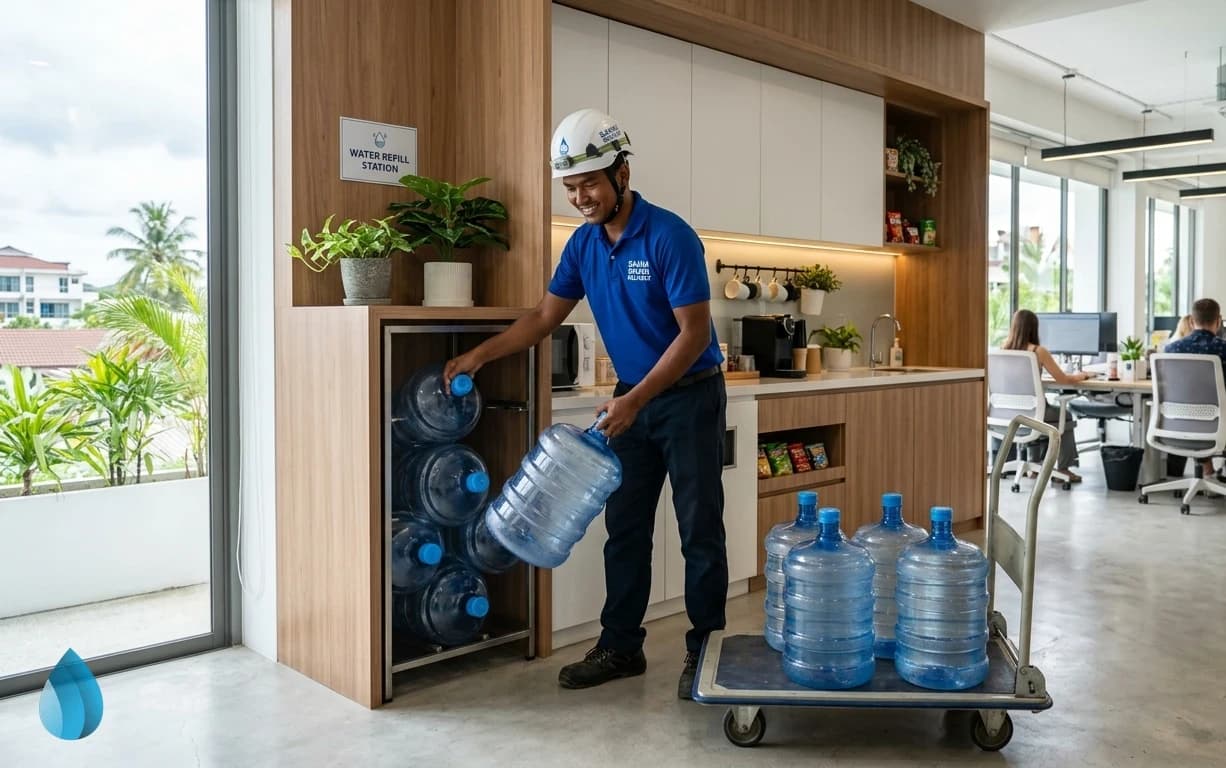
Manual store runs burn valuable staff hours and rarely keep pace with daily office thirst. At three in the afternoon during peak island heat, I managed urgent resupply requests from managers who ran out of stock unexpectedly. Automated restock schedules remove this headache entirely. Booking your delivery slot before the weekend rush begins protects your team from empty pantries, leaving everyone focused on work instead of running errands.
Calculating drinking requirements using staff size, working hours, and tropical heat keeps your workplace comfortable and productive. A quick scheduling tip: pick recurring delivery dates that match your weekly consumption to keep office pantries stocked continuously without manual store trips.